
Glass Restored Before Permanent Etching Sets
Hard Water Stain & Mineral Removal in Pueblo for sprinkler overspray and mineral deposits
Hard water staining appears as cloudy white or gray deposits on glass where sprinkler water repeatedly hits windows, leaving behind calcium, magnesium, and silica that standard cleaning cannot remove. Once these minerals bond to glass surfaces, they create a rough texture that scatters light and obscures views, eventually etching into the glass if left untreated. Southern Colorado's water supply contains higher mineral concentrations than many regions, making sprinkler-related staining a common issue on ground-floor windows and sliding doors near landscaping.
Peak Exterior Services uses specialized treatment processes designed to dissolve and remove mineral deposits without damaging glass or surrounding frames. Standard household cleaners and vinegar solutions often fail to penetrate heavy buildup, while abrasive scrubbing risks scratching the surface. Professional mineral removal targets the chemical bond between deposits and glass, restoring clarity when staining has not yet caused permanent etching.
Schedule a glass assessment to determine the extent of mineral buildup and confirm whether staining can be reversed before etching becomes permanent.
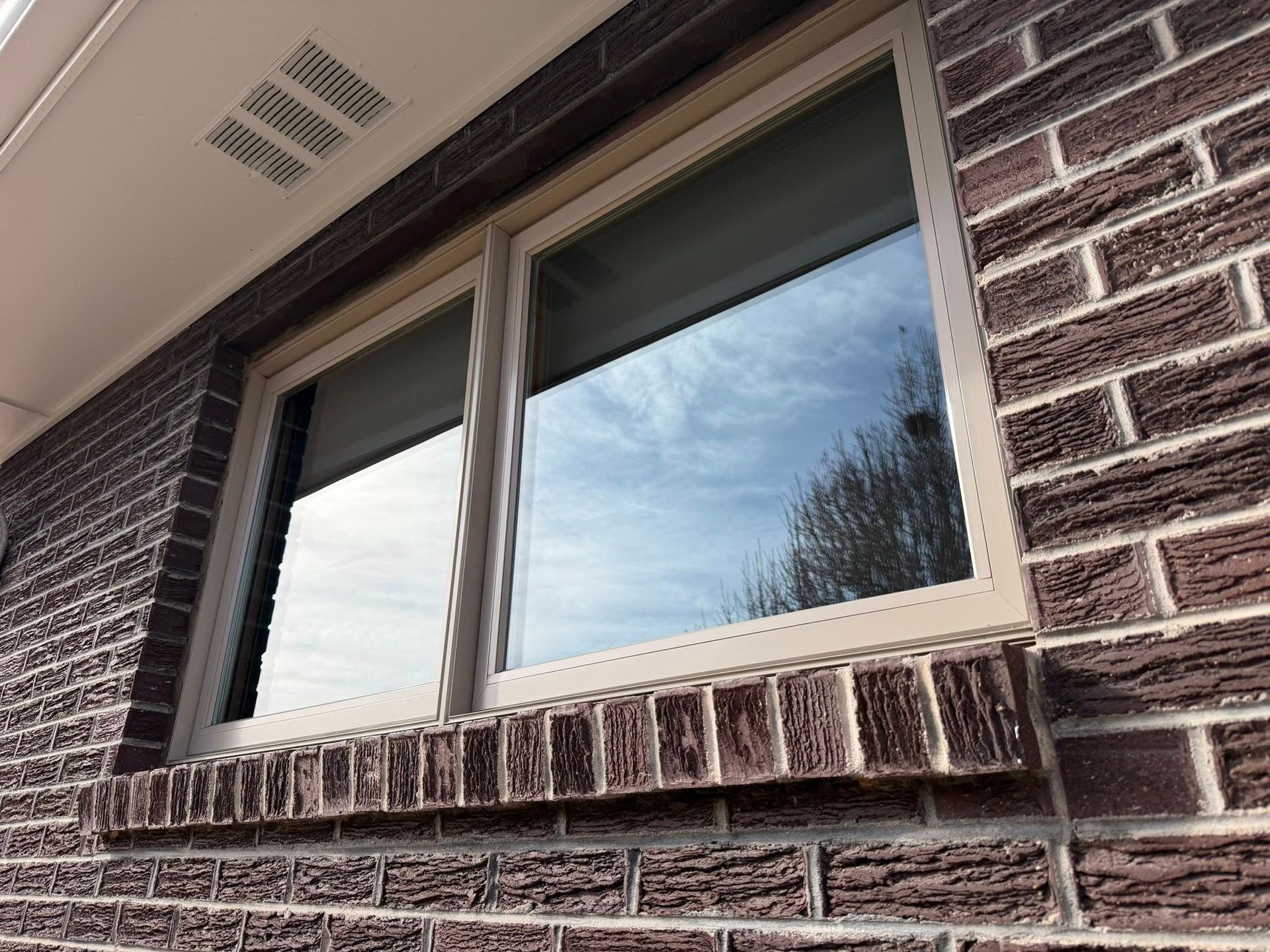
How Mineral Removal Restores Glass Clarity
Mineral removal involves applying acidic solutions that break down calcium and magnesium deposits, allowing the dissolved material to be wiped away without excessive scrubbing. Treatment effectiveness depends on how long staining has existed—fresh deposits respond quickly, while years of buildup require multiple applications and longer dwell times. Windows affected by daily sprinkler cycles show the heaviest staining because repeated wetting and drying layers minerals incrementally, building thickness over time.
Once treatment completes, glass regains transparency where cloudiness previously blocked light, windows no longer feel rough to the touch, and water beads off the surface instead of leaving new spots immediately. The difference becomes most visible in direct sunlight, where untreated staining scatters light and creates a hazy appearance while restored glass transmits light cleanly. Addressing staining early prevents permanent etching, a condition where minerals chemically alter the glass surface in ways that cannot be reversed.
This service functions as restoration rather than routine cleaning—it corrects neglected damage that accumulated over months or years. Adjusting sprinkler heads to avoid glass contact prevents future staining, though some properties have irrigation systems positioned in ways that make overspray unavoidable without redesigning landscape watering zones.
Common Questions About This Service
Homeowners dealing with stained glass often want to know whether their windows can be saved and what the treatment process involves.
What's the difference between staining and etching?
Staining sits on the glass surface as mineral buildup that can be chemically removed, while etching occurs when minerals react with the glass itself and alter the surface permanently—etched glass cannot be restored to original clarity.
Why does Southern Colorado water cause more staining than other regions?
Water sourced from aquifers and wells in this area carries higher dissolved mineral content due to the limestone and mineral-rich geology, resulting in heavier deposits when water evaporates on glass surfaces.
How long does mineral removal take to show results?
Light staining clears within one treatment session, but heavy buildup may require multiple applications spaced over several days to fully dissolve deposits without aggressive scrubbing that risks scratching.
Can window film or coatings prevent future staining?
Hydrophobic coatings cause water to bead and roll off rather than evaporating on the surface, reducing mineral deposit formation, though no coating eliminates staining if sprinklers repeatedly drench the glass.
Is there a point where stained glass should be replaced instead of treated?
When etching has already occurred or when the cost of repeated treatments exceeds replacement value, new glass becomes the practical solution, which is why early treatment matters.
Peak Exterior Services evaluates glass condition throughout Pueblo and recommends either restoration treatment or replacement based on the severity of staining and etching. Request an on-site glass assessment to receive a detailed evaluation and cost estimate for mineral removal services.